
Green thought: Ecofeminism
Connecting the exploitation of women and nature
Last week we rather rashly promised a single post on the history of the Green movement and a review of the broad church of Green political thought. However, we quickly realised that each single feature of that promise could compromise an entire book, and to fit all that expansive history and rich political thought into an 800-1000 word Substack post would be to omit a world of ideas and discussion.
So, as Green Isles is a platform to discuss and develop Green ideas, philosophies and analysis, we want to concentrate instead on briefly introducing and describing the broad and overlapping variety of thought that exists within Green political movements: ecofeminism; eco-anarchism and bioregions; deep ecology, social ecology and, the moment in which the Green parties of the UK currently find themselves, ecosocialism. This first week, ecofeminism.
Ecofeminism
‘If feminism wants to maintain its internationalist vocation, it must also think in environmentalist terms, because poor women of the so-called “South” are the first victims of the destruction of the environment aimed at producing sumptuary objects sold in the developed world.’ ~ Alicia H. Puleo, Argentinian feminist philosopher (@aliciapuleo)
‘The planet placed in the feminine will flourish for all.’ ~ Françoise d’Eaubonne, French author, labour rights activist, environmentalist, and feminist.
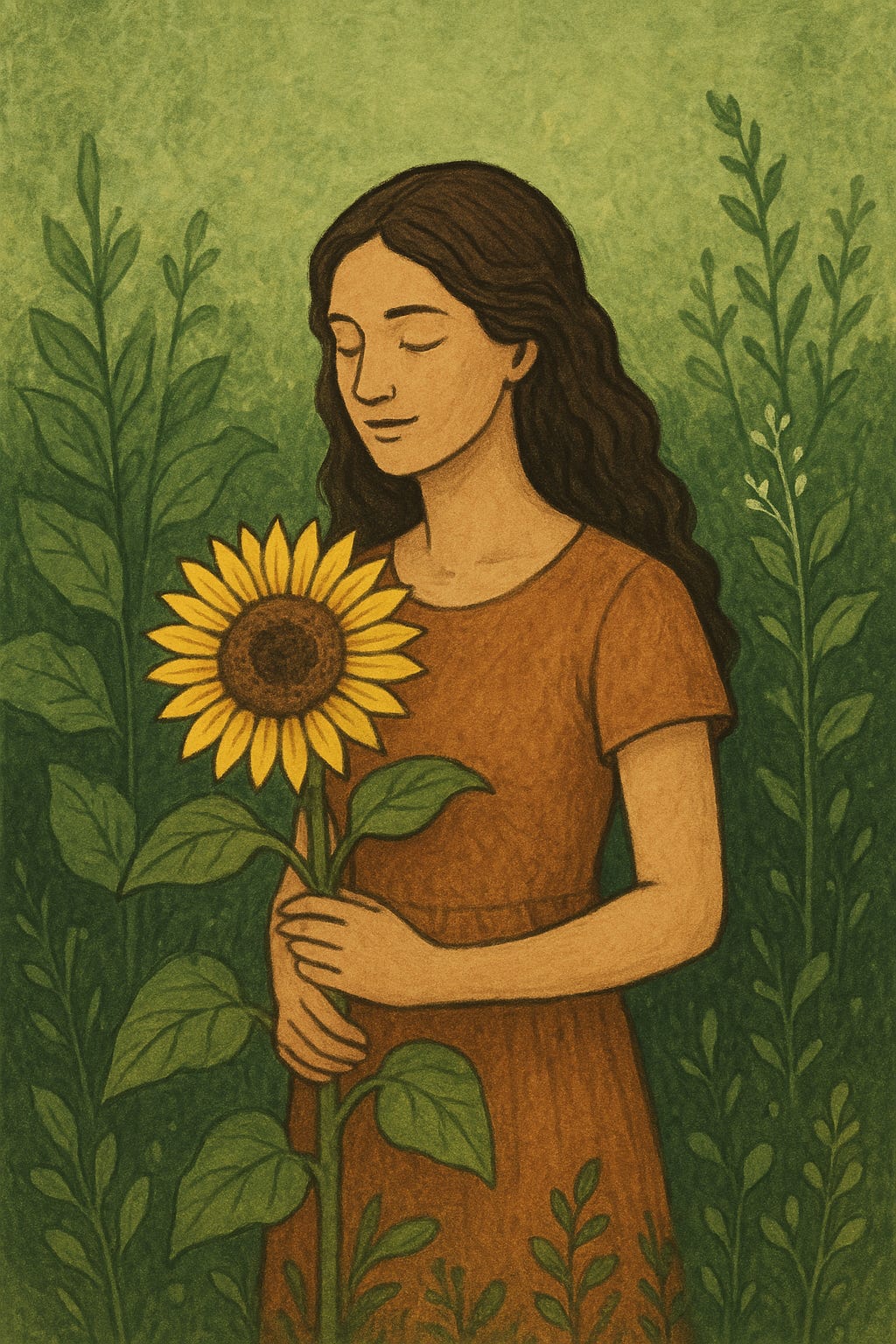
Ecofeminism, or ecological feminism, addresses the intersection of capitalism’s exploitation of both nature and women, with roots in radical grassroots, Global South and working-class movements. Françoise d’Eaubonne, a foundational thinker of ecofeminism who originally coined the word in her 1974 book Feminism or Death, argued that patriarchal capitalism is the common denominator between women’s oppression and environmental destruction. Ecofeminism challenges the power and control male dominated societies form and maintain over women’s bodies and over natural systems such as soils, seeds, seas and forests, all bodies that sustain and support life.
These controls are maintained through enforcement by state power, corporations and militaries, oppression carried out by the dominant logic of extractive capitalist patriarchy. D’Eaubonne argued that an ecofeminist transformation would mean not just challenging this power and transferring it from men to women, but for the destruction of the power of domination itself, and that feminist struggle in this planetary context is about not just equality or liberation, but survival.
Because while ecofeminism recognises that women are largely barred from equitable access to social, political, and economic rights and benefits, it also uncovers the ways in which women play a crucial role in the fight against the climate change and biodiversity crises in caring for nature and our communities through their labour and ecological knowledge. The marginalisation of women and the destruction of biodiversity might go hand in hand, but, as the Indian scholar and activist Vandana Shiva wrote, ‘Women’s work and knowledge is central to biodiversity conservation and utilisation… [they] perform multiple tasks’ applying their knowledge in overlooked but crucial spaces between formally recognised sectors.
Unequal gender impacts
But ecofeminism also recognises what UN reports and NGOs confirm that women, particularly poor women in the Global South, are often the first victims of environmental destruction. Gender inequality exacerbates the impacts of the climate crisis, as Indigenous women and women in poor, rural communities have a direct relationship to natural resources and local ecosystems. Many women in these communities travel daily to procure water and firewood, forage for or grow food, and care for livestock as caretakers of their families. When climate change impacts - such as drought - women must work harder and longer, travel further, and navigate more obstacles in order to provide for their families.
The parallel of the brutalities visited upon the natural world and the everyday forms of violence and subjugation that women endure is also reflected in the lack of value placed upon nature and the lack of value placed on unpaid domestic and care work described above. Without the former, the economic system and most life systems on the planet that rely in its entirety on a stable climate would fracture. Without the latter, the formal economy would simply collapse. And yet both remain under/unvalued under patriarchal capitalism.
Furthermore, there is an emphasis in ecofeminism on the intimate relationship between the organisation of society and the distribution of power within it, and how environmental harms are experienced and distributed, both locally and globally. For example, pollution particularly affects women’s health to a greater degree than men’s, including reproductive health, breast cancer, and conditions like Multiple Chemical Sensitivity.
Extending the example into a domestic socio-economic framework, POC mothers in the UK are statistically more likely to live in inner city areas of high pollution, and as the (undervalued) main caregiver will be more likely to deal with the consequential issues of poor health in her children and the related socio-economic impacts (increased hospital visits, lowering attainment levels through lost school days, diminished life chances etc).
By way of response, Bangladeshi academic Farhana Sultana calls for a “critical climate justice” framework that pays full attention to who wins, who loses out, where and why under climate change and environmental degradation, discussing how gender, class, colonial legacies and global inequality shape those burdens.
And more recently, as I wrote in last week’s post on political ecology, ecofeminism has seen a turn to the decolonialising of knowledge, drawing into ecofeminism discourse indigenous knowledge and non-human animals, and centring postcolonial, Black, indigenous and Global South feminism, questioning whether the foundational assumptions of feminism itself might be colonial and Eurocentric.


The challenge to mainstream feminism
Making the distinction between ecofeminism and what might be thought of as Western feminism attempting to simply locate its place in patriarchal systems, Shiva says that ‘Ecofeminism is a good term for distinguishing a feminism that is ecological from the kind of feminisms that have become extremely technocratic. I would even call them very patriarchal.’
Recognising the gap between feminism and ecology, Argentinian philosopher Alicia H. Puleo, the author of the opening quote, identifies that environmentalism is not always feminist and traditional feminism does not show great ecological sensitivity, that ‘feminism and environmentalism are still, to a great extent, two worlds with their backs to each other.’
But if feminism is to survive into our precarious future and be true to its aims of equality and liberation for all life, Puleo writes, it absolutely must address environmental issue from the analysis of patriarchy, androcentrism, care, sexism and gender.
Indeed, ‘We must attain the self-awareness of belonging to the fabric of the multiple and multiform life of the planet where we live.
‘And we must understand that its destruction is, in the mid or long term, ours.’
Next week: Green anarchism, or eco-anarchism, that offers a critique of industrialism and extractivism and the use of state power and coercion to enable both and punish dissent, together with a vision of direct democracy through autonomy and self-governance.